When an AI Edit Is Based on an Older Draft
A stale AI edit can overwrite a newer human change. A fictional release-note example shows how strong ETags, If-Match, and a clear conflict path prevent that lost update.
AI engineer.
Product builder.
I build across the whole product: AI workflows, desktop, mobile, backend and the tools that help people use it.
Discuss a projectA restaurant product, built from the counter out.
Offline-first software with AI-assisted imports.
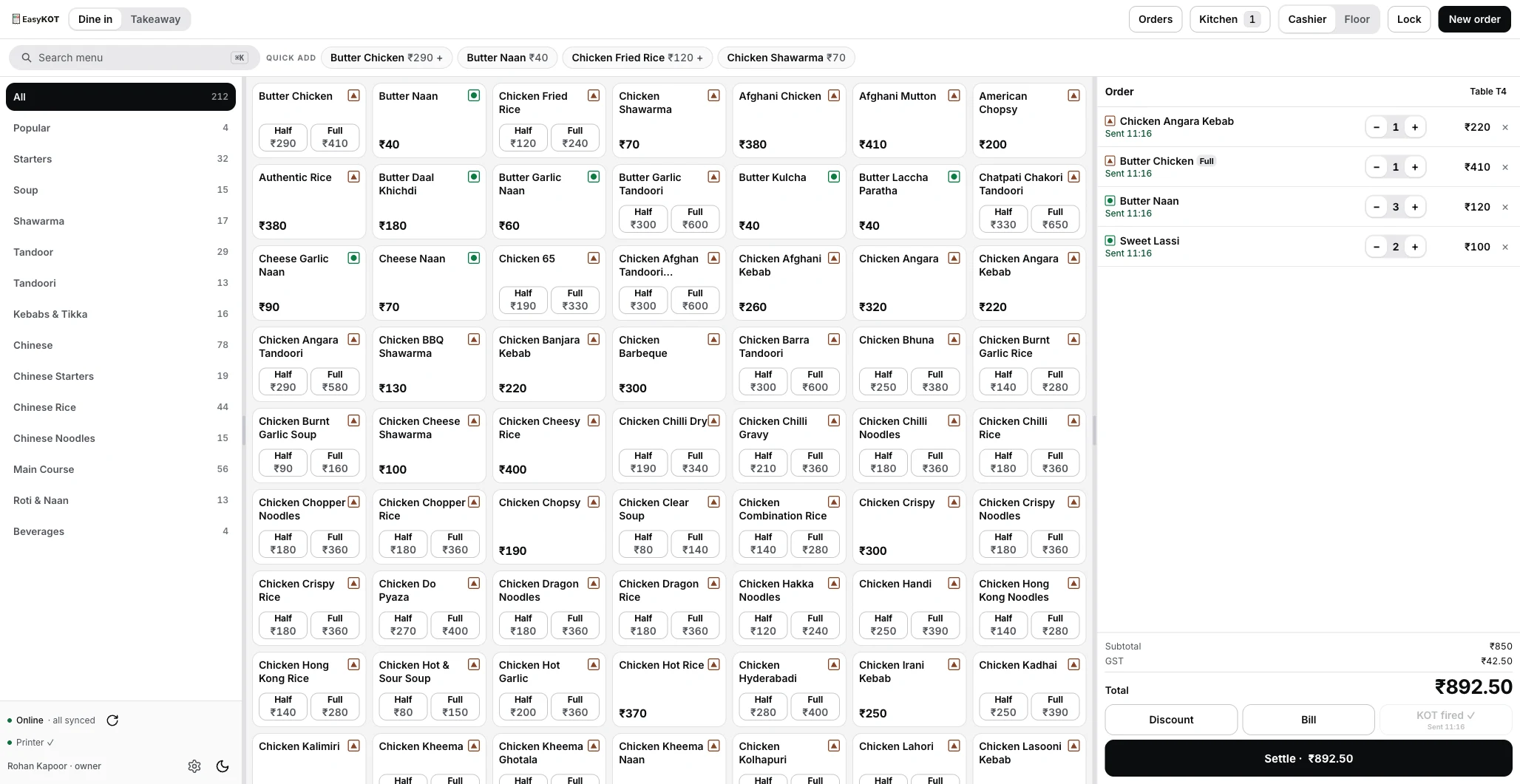
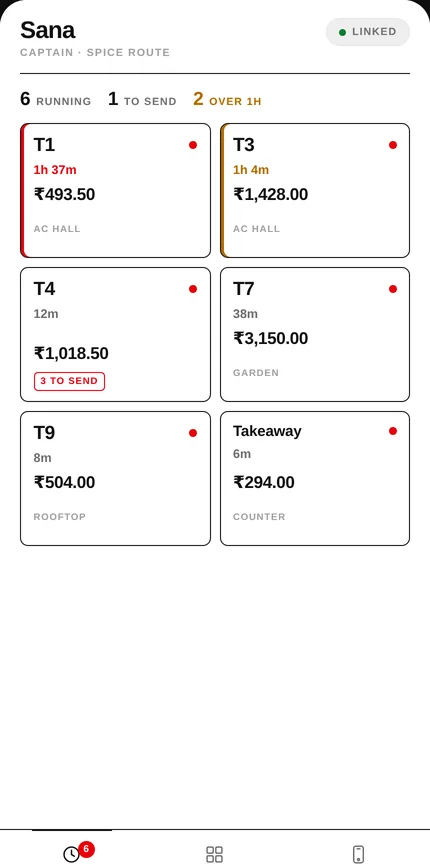
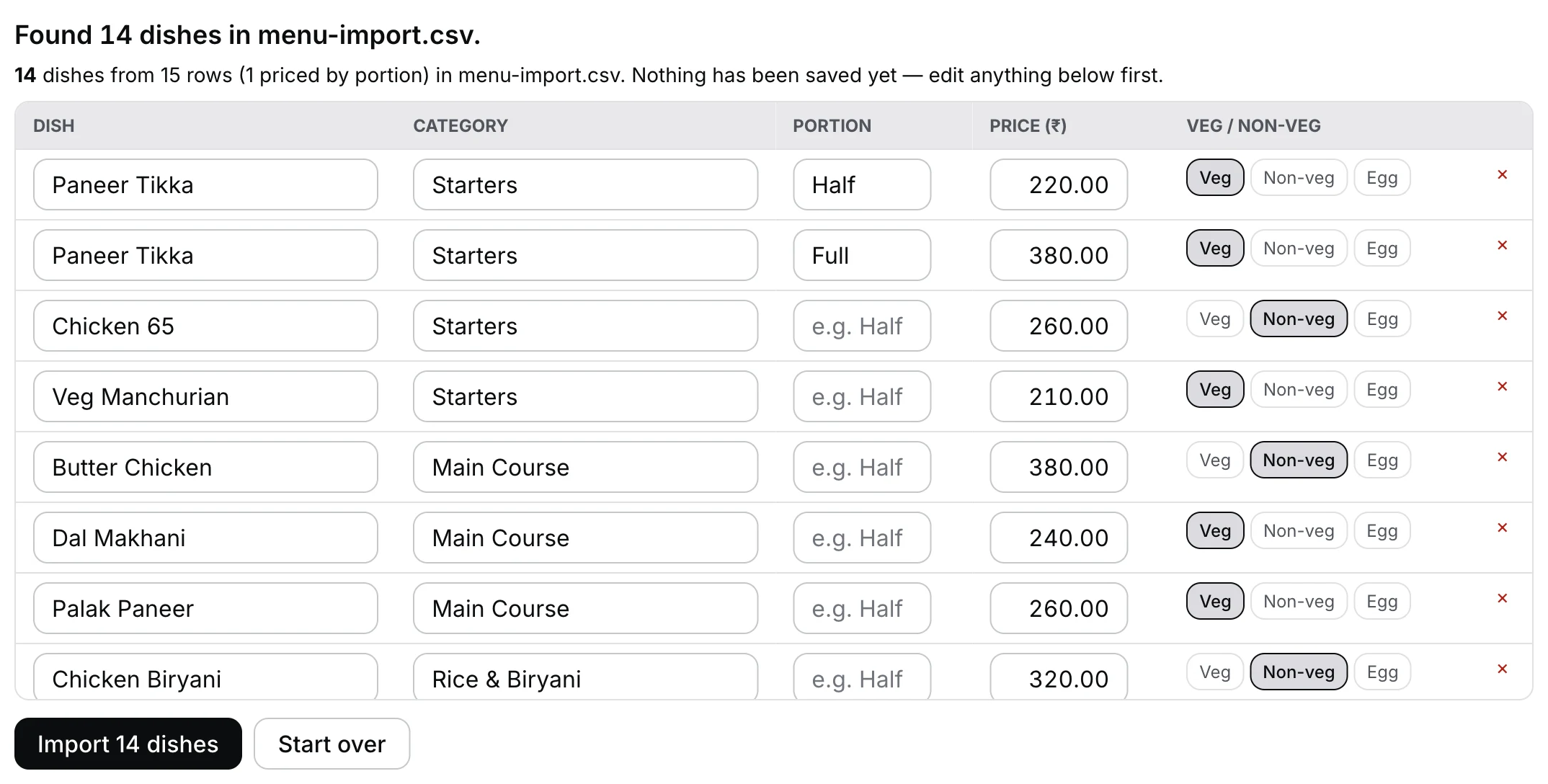
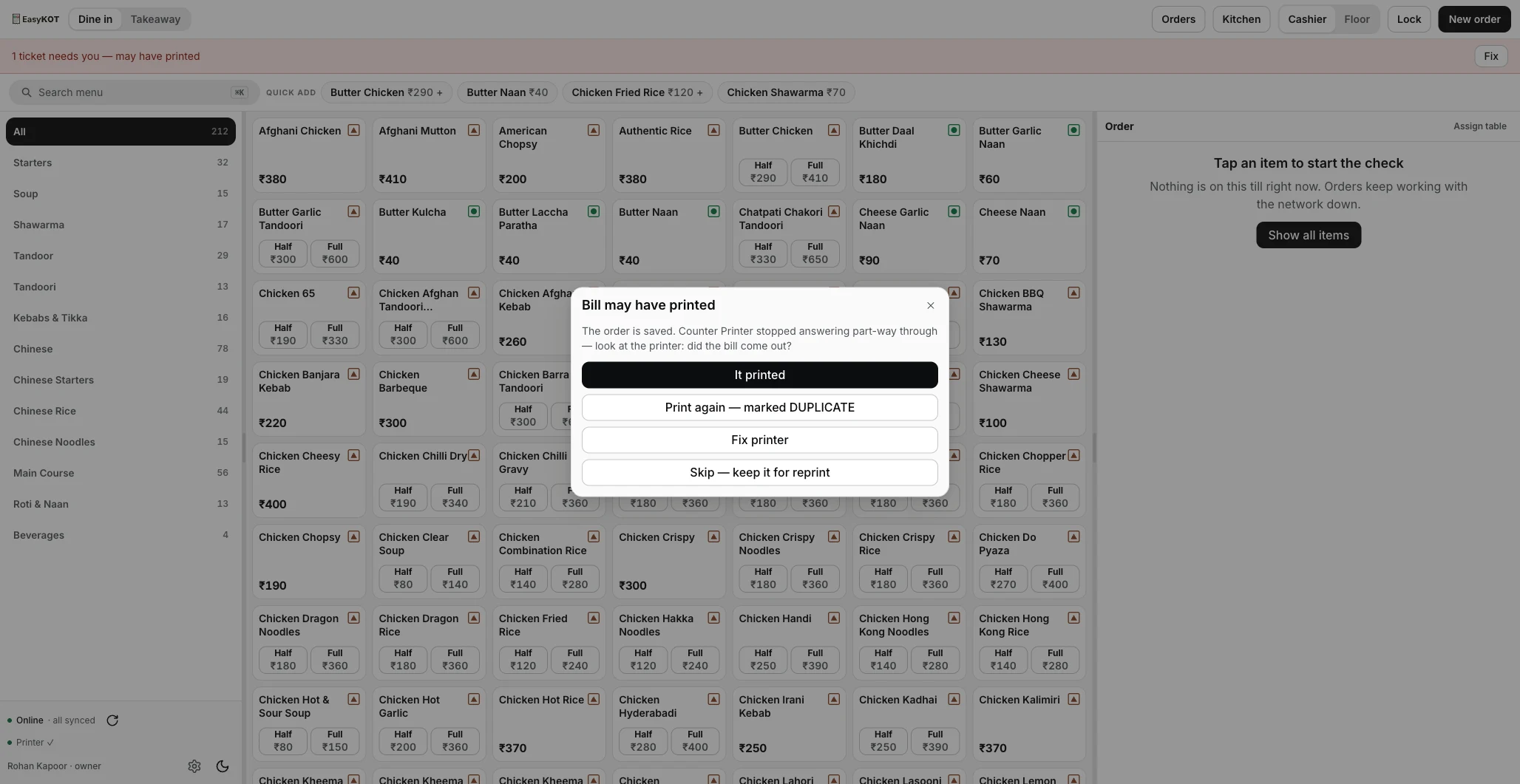
Desktop. Captain phone. Menu review. Print recovery.
Different surfaces. One working product.
The network can wait. The kitchen can't.
In EasyKOT, local writes, kitchen printing and background synchronization have different jobs. Try a simplified order flow.
Explanatory simulation. No real order, printer or server connection.
Save the example to see local storage and printing continue while upload waits. Server validation still governs shared business rules.
A menu photo becomes a reviewable draft. A supplier bill becomes structured suggestions. The product still has to handle uncertainty and decide what can be saved.
The input can be messy.
Structured rows, a second pass, application checks.
Edit the draft before committing dishes.
Let's import Konkan Kitchen's menu from a menu photo into EasyKOT. Visit the owner admin at app.easykot.com and sign in. On Get started, find Add your menu. Click Choose a file and select your menu photo. Use a clear photo so dish names and prices are easy to check. EasyKOT reads the menu and prepares a draft. Wait for the review screen. Nothing has been saved yet. Compare every dish, category, portion, price, and veg or non-veg label with your menu card. Scroll through the whole list. Check both prices for dishes sold by portion. Chicken Biryani Half ₹180. Chicken Biryani Full ₹320. Paneer Butter Masala Half ₹160. Paneer Butter Masala Full ₹280. If anything needs correcting, edit it here before importing. Do not continue with a missing or incorrect price. When everything matches, click Import 15 dishes. Wait for the import result. Your menu is now saved. Open Menu & stock, then All items to check it. Here are our 15 dishes. Updating dishes and adding varieties each have separate videos.
Implementing AI-assisted naming, validation and routing for accounting documents. Small, specific capabilities inside a larger workflow.
Read the implementation overviewI also build things that explain the things I build. Visual courses, a learning lab and an inspector that puts an answer next to its evidence.
Explore the learning productChange the question. Inspect the source.
See where the answer has to stop.
Keep your receipt or order confirmation.
Sale items can be returned within 14 days, unused and with proof of purchase.
Refunds go to the original payment method.
Included as evidence
Yes. Sale items can be returned within 14 days, unused and with proof of purchase.
Supported by the policy
The answer keeps all three conditions from the source.
A browser simulation with fixed examples. No model call, embeddings or live retrieval. Why make the evidence visible?
Engineering notes and sourced AI explainers. The date and evidence matter.
A stale AI edit can overwrite a newer human change. A fictional release-note example shows how strong ETags, If-Match, and a clear conflict path prevent that lost update.
A fictional stock-count sheet shows how to preserve an explicit zero, a blank cell, a field not found on the inspected pages and an unreadable value in an AI extraction contract.
A tool call can commit a change while its reply is lost. A fictional invoice draft shows the idempotency contract and failure tests to require before automatic retries.
How I separate restaurant billing from AI imports: local SQLite, queued sync, Laravel validation and human-reviewed suggestions in EasyKOT.
The UK’s 24 October announcement combines public funding with company commitments. Here is how to separate cash, model credits, access, and work that has actually been delivered.
Ai2’s October 22 release precomputes annual 10 m satellite embeddings. Here’s how developers can reuse those vectors, and why they still need labels, coverage checks, and validation.
Google Cloud says OpenAI models are rolling out to selected enterprise customers in private preview; OpenAI says general availability is planned in coming weeks. Here is what to verify before building around the new route.
OpenAI says its Orchestra Bio platform will join Rosalind to coordinate research workflows. Use a simple dependency check to test workflow agents without mistaking a plan for a proven result.
OpenAI’s October 19 update describes coding evaluations for less common languages. Try this behavior-preservation checklist before trusting a rewrite.
Google DeepMind's October 15 walkthrough shows an AI agent helping researchers find a peptide candidate. The company says lab validation is underway; here is a practical way to trace evidence in your own AI workflows.
I've worked with startups and enterprise teams.
Bring the real problem, the constraints and the questions.